

Anatomy of Engineered Collapse
A Strategic Analysis of U.S. Intervention Patterns in West Asia and North Africa
This analytical report draws on publicly available official sources — including United Nations Security Council resolutions, reports by the Special Inspector General for Iraq Reconstruction (SIGIR), and U.S. Treasury documents — to examine a controversial thesis: that American interventions in the region were not merely costly miscalculations, but followed a recurring structural pattern.
While mainstream analyses often describe Iraq and Libya as examples of failed nation-building or flawed post-war planning, this report advances an alternative hypothesis. It argues that what has been labeled “failure” may in fact reflect the successful implementation of a strategy centered on structural destabilization.

The Official Narrative: Costly Mistakes
In dominant Western discourse, the Iraq War and the Libya intervention are frequently described as misjudgments. Poor planning, insufficient cultural understanding, and the complexity of post-conflict governance are cited as key reasons for prolonged instability.
Statements such as “We are not very good at nation-building” reflect this interpretation—one that frames chaos as the unintended outcome of overreach rather than deliberate design.
However, this report questions whether repeated structural collapse across multiple cases can reasonably be attributed to coincidence or incompetence alone.
The Alternative Hypothesis: Structural Destruction as Strategy
According to this framework, a four-phase operational pattern can be identified:
Phase 1: Economic and Currency Warfare
Destabilizing the social contract through financial deprivation and monetary collapse.
Phase 2: Converting Collapse into Chaos
Leveraging internal instability to legitimize further intervention.
Phase 3: Military Intervention Under Legal Cover
Establishing a casus belli and securing international legitimacy through formal mechanisms.
Phase 4: Blocking Independent Reconstruction
Dismantling governance structures to prevent the re-emergence of sovereign stability.
Within this thesis, destruction is not viewed as collateral damage but as the strategic endpoint.
Phase One: Economic Warfare — “Make the Economy Scream”
Before overt military action, economic pressure is positioned as the primary tool.
This phase includes:
• Freezing foreign assets
• Blocking access to reserves
• Comprehensive financial sanctions
• Engineering currency depreciation
The quote often cited in this context — “Make the economy scream” — is interpreted as emblematic of a broader strategy to undermine domestic legitimacy through economic strain.
Iraq in the 1990s and Libya prior to 2011 are presented as case studies in economic isolation preceding direct intervention.
Iraq: Monetary Collapse and Financial Control
During the 1990s, allegations emerged that large quantities of counterfeit Iraqi dinars entered circulation. Some sources attributed this to covert destabilization operations, though definitive public confirmation remains contested.
The alleged mechanism is described as:
Monetary injection → Financial instability → Inflation → Political weakening
After the 2003 invasion, Iraq’s banking system was restructured, and oil revenues were placed under external oversight.
The humanitarian impact of sanctions in the 1990s remains heavily debated. Estimates suggested hundreds of thousands of child deaths due to shortages of medicine and essential supplies. Some UN officials publicly criticized the sanctions regime as devastating in scope.
Phase Two: From Economic Breakdown to Engineered Instability
Following economic weakening, the second stage involves the political transformation of crisis into disorder.
Documents such as the 1996 “A Clean Break” policy paper and later discussions surrounding a “New Middle East” are cited as intellectual antecedents for regional redesign.
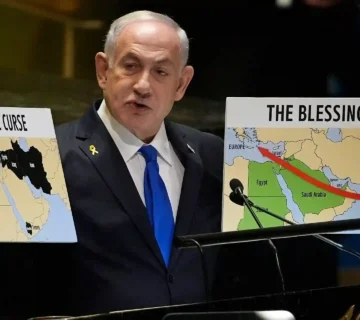
In 2006, discussions of redrawing Middle Eastern borders appeared in certain military and policy publications. A controversial map sometimes referred to as the “Blood Borders” proposal suggested partitioning Iraq and altering regional boundaries.
While such proposals were not formal U.S. policy, proponents of the structural collapse thesis argue that they reveal strategic thinking aligned with fragmentation.
Phase Three: Legal Framing and Casus Belli
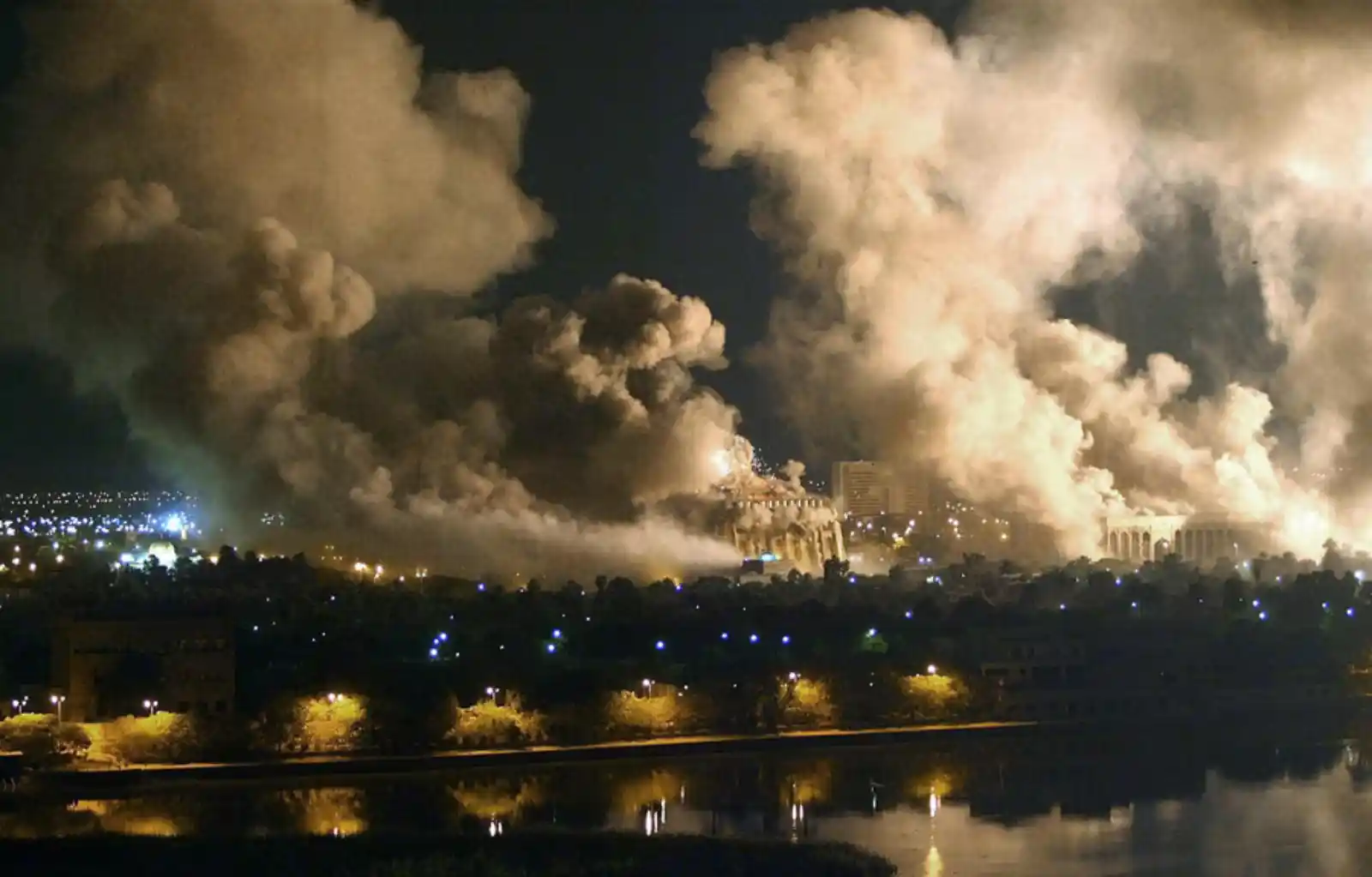
In Iraq, the justification for war centered on weapons of mass destruction (WMD) — claims that were later found unsupported by conclusive evidence. In Libya, UN Security Council Resolution 1973 authorized the protection of civilians under the Responsibility to Protect (R2P) doctrine. Critics argue that the implementation extended beyond civilian protection into regime change. In this interpretation, international legal mechanisms serve as legitimizing frameworks for intervention.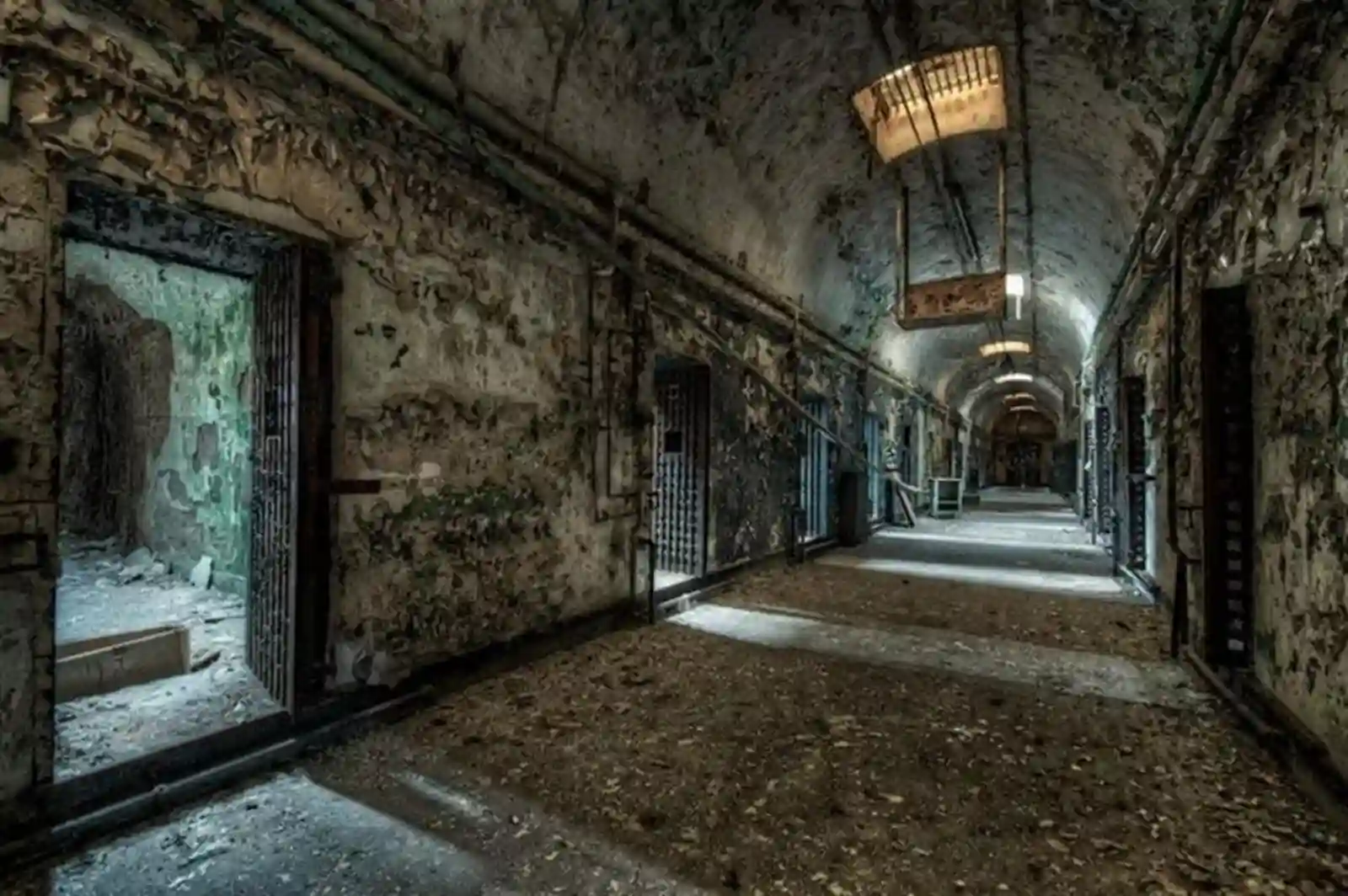
Phase Four: Institutional Dismantling
Following intervention, key state structures were dissolved.
In Iraq:
• The national army was disbanded.
• De-Baathification policies removed large segments of the administrative class.
• Security institutions collapsed.
The pre-war “Future of Iraq Project,” designed to guide reconstruction, was reportedly sidelined.
The result was a power vacuum that contributed to insurgency and chronic instability.
SIGIR reports documented billions of dollars in reconstruction funds transferred in cash, with significant sums unaccounted for. Widespread corruption and weak oversight further undermined rebuilding efforts.
The Balance Sheet: Before and After
Iraq (pre-2003):
- Functioning infrastructure
- Centralized control over energy resources
- Higher per capita income relative to immediate post-war years
Post-intervention:
- Civil conflict
- Collapse of public services
- Economic dependency
Libya (pre-2011):
- One of Africa’s highest Human Development Index (HDI) rankings
Post-intervention:
- Governance breakdown
- Chronic civil conflict
- Regional instability
These contrasts are presented as evidence that the outcome was systemic weakening rather than reconstruction.
Creative Destruction or Engineered Disorder?
The report frames the pattern as geopolitical “creative destruction” — replacing independent states with weakened, dependent structures.
Energy corridors, resource access, and strategic geography are described as central motivations.
However, critics of this thesis argue that the scale of unintended consequences — including the rise of extremist groups — points more toward strategic miscalculation than master planning.
From Nation-Building to Nation-Burning?
Official rhetoric emphasized nation-building. Yet this analysis characterizes the outcome as “nation-burning” — prolonged instability, weakened institutions, and systemic corruption.
According to this perspective, the day after intervention did not mark renewal but the beginning of chronic disorder.
Final Assessment
This investigative framework suggests that structural collapse across multiple interventions reflects strategic design rather than repeated failure.
Yet the core analytical question remains unresolved:
Can a coherent long-term strategy be definitively inferred from patterns of intervention and instability? Or do these outcomes reflect complex, unintended consequences of interventionist policy?
Answering this question requires deeper examination of classified records, policymaking processes, and the broader geopolitical environment in which these interventions unfolded.
You can download the PDF file from here